

Why do dogs like squeaky toys? Some dogs find the squeak appealing because it may resemble sounds made by prey and gives them feedback when they bite. A person's response can add to the game. Dogs differ, though: some enjoy squeaks, some ignore them, and some find the sound frightening.
Watch how the dog handles the toy, too. Carrying a plush toy and tearing it open call for different checks.
Why do dogs like squeaky toys? The role of sound
One possible explanation is that a high-pitched squeak resembles a sound made by prey. Veterinarian Jennifer Coates connects this with a dog's predatory sequence, including stalking and catching, in PetMD's guide to squeaky toys.
A squeak alone cannot tell you exactly what a dog thinks it is hearing.
Dogs may prefer chewing, chasing or playing with a person. Even dogs of the same breed can have different preferences, as the AKC's guide to toy preferences explains. Watch the individual dog rather than choosing by breed alone.
Instant feedback and the repeat loop
Bite, sound, repeat
A working squeaker responds to pressure. Coates's PetMD article describes that immediate sound as a possible reward that encourages another bite. This helps explain why dog toys have squeakers: the sound gives the dog a response to its action.
How owner interaction can add to the game
If squeaking brings a person over to play, that response can be rewarding too. The sound comes from the toy; the extra attention comes from you.
Why some dogs target the squeaker
Some dogs tear toys to reach the source of the sound, as the same PetMD article describes. This may relate to the predatory sequence; it does not mean a dog needs to silence the toy to feel satisfied.
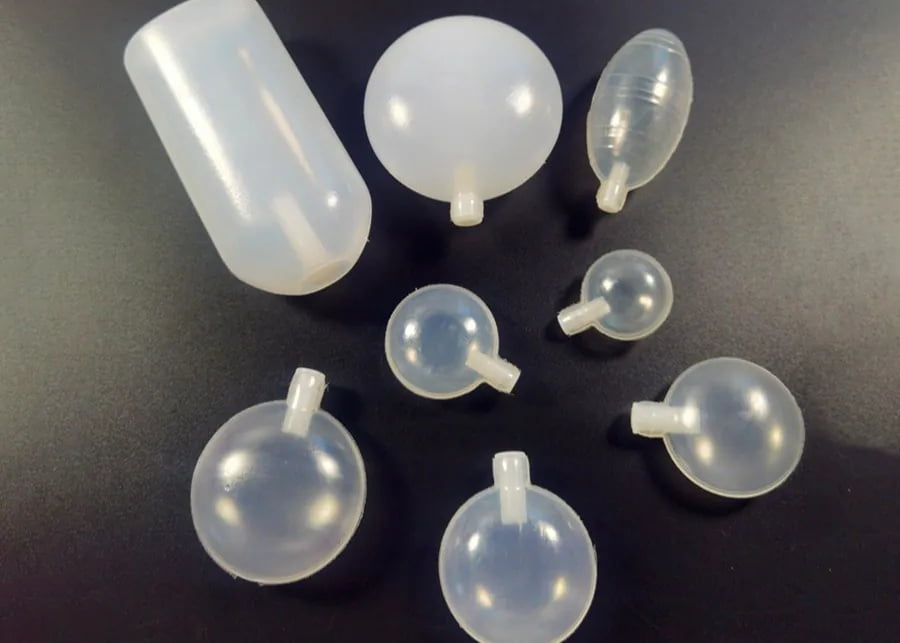
Squeaker components used inside dog toys.
If a toy tears open, remove it from play, even if it still squeaks. A toy that still makes noise can have exposed filling or loose parts. The VCA toy-selection guidance recommends retiring toys with exposed stuffing or broken material.
When dogs dislike squeaky toys: fear vs. indifference
Not playing with a squeaky toy does not, by itself, show that a dog is afraid. Look at the response to the sound before deciding what to offer next.
| What you notice | How to respond |
|---|---|
| The dog ignores the toy without obvious distress | Try a different type of toy. |
| The dog retreats, hides, freezes or tries to escape when it squeaks | Stop making the sound and let the dog move away. These signs can indicate fear, but they are not a diagnosis. |
| The reaction is strong, persists or causes concern | Ask a veterinarian for advice rather than repeatedly testing the reaction. |
VCA's guidance on noise fears advises reducing exposure to frightening sounds and seeking professional help for fearful responses. If a toy's sound appears to frighten your dog, stop using it rather than trying to force the dog to get used to it.
Safe play rules for squeaky toys
Match size and chewing habits, then supervise
Choose a toy suited to the intended activity that the dog can handle comfortably. Avoid toys small enough to fit entirely inside its mouth. Consider detachable parts as well as overall size. Soft toys need particular care when a dog tends to pull them apart.
Supervise play and inspect the toy before use. Watch for opening seams, exposed filling and parts that are coming loose. Remove a damaged toy even if it is new. Supervision helps you notice damage, but it cannot guarantee that no part will be swallowed.
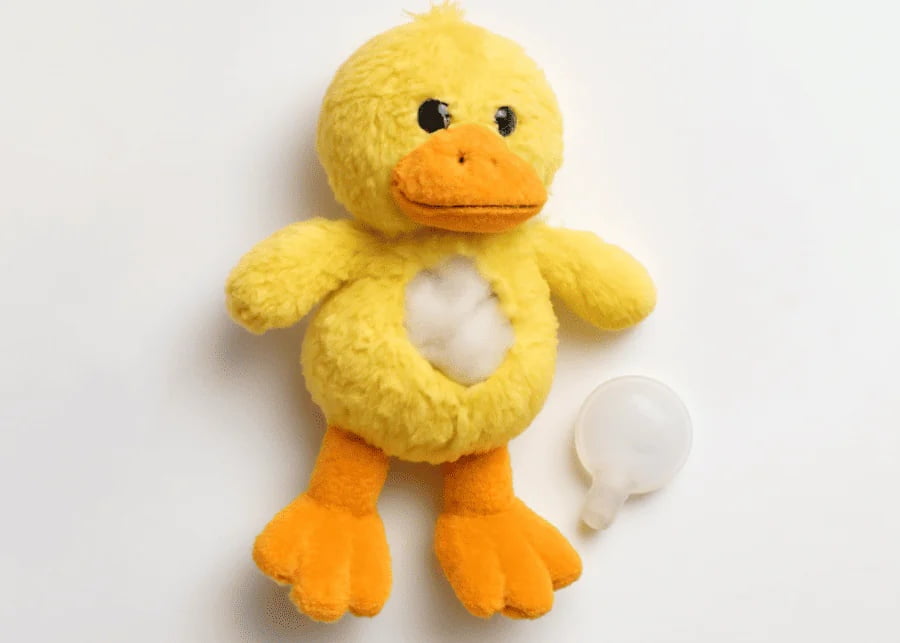
A plush toy with exposed stuffing and a separate squeaker.
If a squeaker is swallowed or choking is suspected
Swallowed toy parts can cause an intestinal blockage and other serious complications. If you know or suspect your dog has swallowed a squeaker or another toy part, contact your veterinarian immediately. Do not wait for symptoms or try to make your dog vomit without veterinary instructions. See Lort Smith's guidance on foreign body ingestion.
For breathing difficulty or suspected choking, seek emergency veterinary care. VCA's guide to emergencies in dogs explains when urgent veterinary attention is needed.
What our sound check covers
At Preeminent, we usually check a plush toy's squeaker by pressing the toy and listening. That checks whether it works; it does not test chew resistance or establish protection against swallowing a loose part.
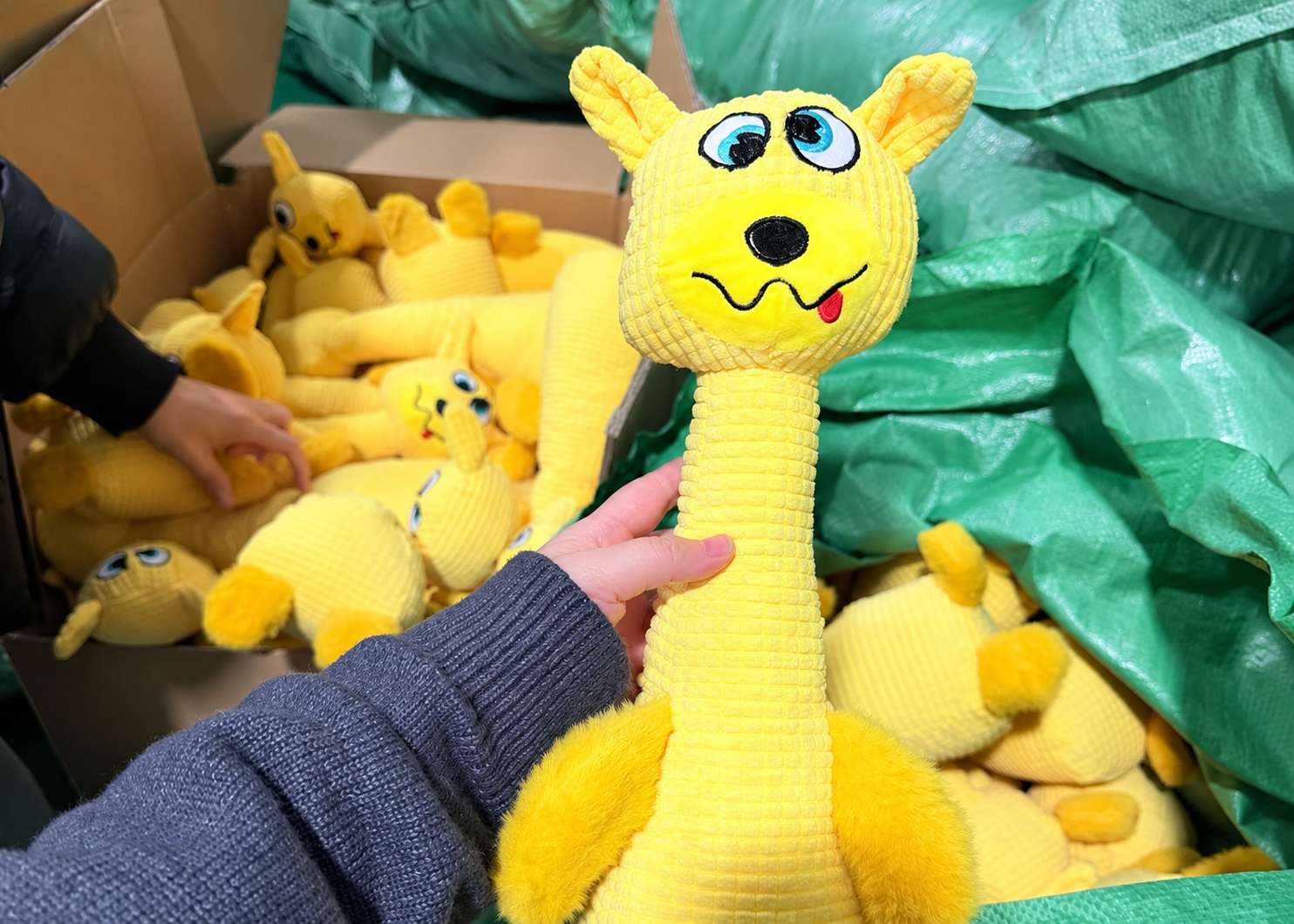
Pressing a plush toy to check that its squeaker works.
We cannot promise that a plush toy will withstand every dog's chewing. How it holds up depends on the design, materials and use.
Match squeaky toys to play style
Treat sound as one feature of the toy. Start with what the dog actually does with it, then assess the whole design.
| Observed activity | Selection point |
|---|---|
| Chasing or retrieving | Check whether the dog can pick up and carry it, and review the toy's size and intended use. |
| Carrying or gently mouthing | Consider a suitable soft toy, while still checking seams, filling and attached parts. |
| Pulling at seams or tearing out components | Reconsider whether a soft squeaky toy suits that dog's use; do not choose on sound alone. |
Reassess the choice if the dog starts using the toy differently. For a broader comparison of toy types and checks, see how to choose a dog toy.
For pet brands, it also helps to separate the sound requirement from the intended play activity. In our custom projects, customers generally ask for a sound feature that works. Some also specify a sound location or internal configuration, and we have made toys to those requirements. Customization alone cannot guarantee protection against swallowing loose parts.
If you are considering custom plush dog toys, describe the intended activity and the sound feature you want, alongside the size and other project requirements.
Frequently asked questions
Are squeaky toys safe?
A squeak alone cannot tell you whether a toy is suitable. Consider the individual dog, the toy's size and condition, and how it is used. Supervise play, remove damaged toys and seek veterinary advice immediately if a part may have been swallowed.
To discuss a plush toy design, share your toy project requirements with Preeminent.