
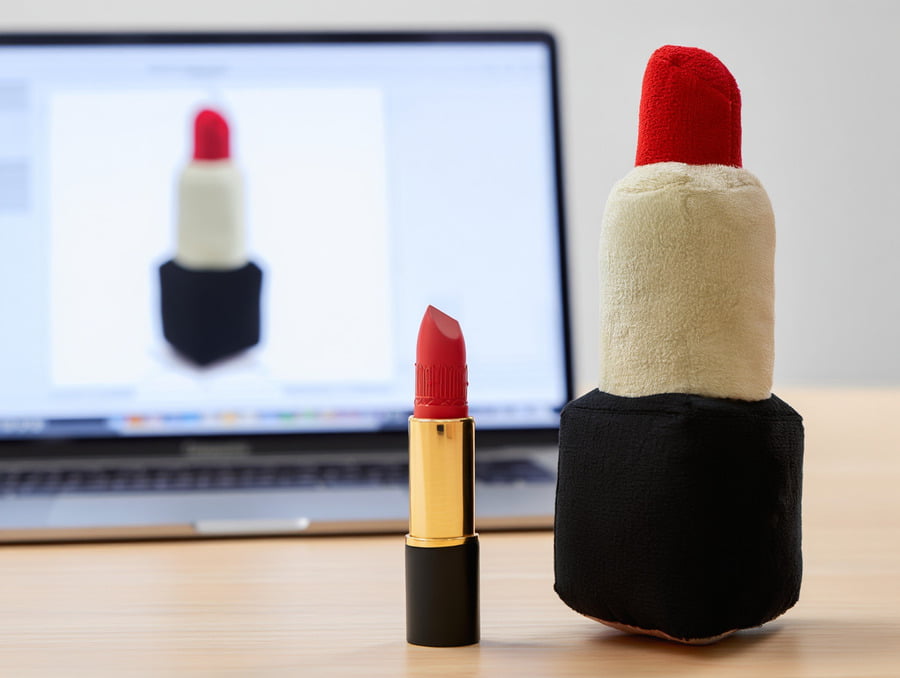
Your perfect dog toy design is ready, but dog toy manufacturers say it’s too expensive or unsafe. The dream feels crushed by the harsh reality of production.
To design a successful dog toy, you must design for manufacturing (DFM). This means balancing creativity with material costs, structural durability, and safety standards from the very first sketch. This guide shows you how to think like a manufacturer to ensure your design is viable.
After weeks of inspiration, sketching, and modeling, you finally have it—a dog toy design you believe will take the market by storm. It’s innovative, functional, and perfectly captures your brand’s spirit. You confidently send your masterpiece to a manufacturer, expecting them to share your excitement.
However, the feedback you get is crushing:
- "This curved design requires a very expensive mold, which will push costs 50% over budget."
- "The eco-friendly material you chose failed bite-strength tests; it’s not suitable for strong chewers."
- "This small component is a safety hazard and won’t pass the ASTM F963 standard."
In an instant, your creative passion hits a wall of manufacturing reality. This is a common struggle for countless brands. This guide is not meant to limit your creativity, but to empower it. As a pet toy manufacturing expert with over 10 years of experience, I will take you "behind the scenes" of design, helping you think like a manufacturing expert from the very beginning. We will show you how a ‘good design’ becomes a ‘successful manufactured product’ and how to prepare a ‘Tech Pack’ that any professional manufacturer can understand and execute perfectly. This is not ‘designer vs. manufacturer’; it’s ‘designer x manufacturing expert’ working together.
Before You Design: What’s the First Step to Creating a Successful Dog Toy?
Struggling to know where to begin with your toy idea? A great design starts long before you sketch, with a deep understanding of the market, your customer, and your brand.
The first step is translating business strategy into clear design specifications. This involves researching competitors, defining your target dog and owner, and aligning the toy’s visual language with your brand’s identity. This foundation makes every subsequent design decision purposeful and effective.
This initial strategic work is what separates a good idea from a successful product. It’s about turning abstract goals into a concrete blueprint for your design. We guide our clients through this process to ensure their creative energy is focused and effective from the very beginning.
Step 1: Market Research
Think of yourself as a design detective. When you analyze a best-selling competitor’s toy, ask why it’s successful. Is it the specific curve that fits perfectly in a dog’s mouth? Is it the unique squeaker pitch that triggers curiosity? Go deeper by reading customer reviews, especially the negative ones. These are a goldmine for creating a "design taboo list." For example, if you see multiple complaints like, "My dog tore the edge open in five minutes," your design rule becomes: avoid sharp external corners and use rounded contours for better durability.
Step 2: Target Audience
Don’t just design for "a dog." Create a "Design Persona." Are you designing for a Corgi living in a small apartment? Then you might need to consider quieter squeakers and features that work well for indoor play. Or is it for a Golden Retriever on a farm? In that case, you should focus on fetch-friendly shapes and durable, easy-to-clean materials. A toy designed as a comforting companion for a puppy will be vastly different from an interactive, tough toy for a powerful chewer like a Rottweiler.
Step 3: Brand Positioning
Your toy is a physical representation of your brand. You need to establish its "visual language."
- High-End Eco-Brand: Your language might be earth tones, natural materials like cotton or rubber, minimalist shapes, and a finely embroidered logo.
- Vibrant, Playful Brand: You could use high-contrast color blocking, irregular shapes, and a combination of interactive elements like crinkle paper and multiple squeakers.
- Brand Extension: If you’re like one of our clients who owns a popular beverage brand, your goal might be to perfectly replicate the look of your best-selling drink can as a plush toy, creating a fun, recognizable product for your human customers’ pets.
What Are the Key Factors to Consider When Designing a Dog Toy?
Your design looks great on paper, but will it hold up to a real dog? Balancing aesthetics, fun, and durability is the biggest challenge in toy design, often leading to costly failures.
Focus on materials, structure, and interactive elements as an integrated system. A great toy designer is also a part-time structural engineer, choosing materials for the desired play experience and designing shapes that intelligently distribute bite force, ensuring fun doesn’t compromise safety.
This is where we, as dog toy manufacturer, provide the most value. We help you look at your design through the lens of physics and dog behavior. It’s not just about making it strong; it’s about making it smart. Durability comes from clever design, not just piling on more material.
How to Choose Right Materials?
The material is the heart of the toy’s experience. Instead of just picking a material, think about the interaction you want to create.You can learn more by reading our guide on What is the Best Material for a Dog Toy?
| Desired Experience | Recommended Materials | Key Design Considerations |
|---|---|---|
| Bounce & Chew | Natural Rubber, High-Quality TPR | Wall thickness is critical. A thicker wall increases durability and affects the bounce. |
| Rip & Tug | Canvas, Oxford Fabric, Multi-Layer Plush | Seams are the weak point. Design with double-stitched seams or internal webbing for reinforcement. |
| Soothe & Cuddle | Crystal Super-Soft Plush, Sherpa Fleece | Consider the pile length. Long fur can pose a risk for small dogs if ingested. |
Why is Designing for Different Dog Sizes and Chew Strengths Crucial?
A good toy designer thinks like a structural engineer. You must apply two key principles:
- Stress Dispersion: Avoid designs that concentrate all bite force onto a single, weak point. A toy with a long, thin neck is a classic design flaw. A better approach is to make the neck shorter, thicker, and integrated smoothly into the body.
- Canine Ergonomics: The toy’s shape and size must fit the target dog’s mouth. You can’t simply scale up a Chihuahua toy for a German Shepherd. The grip, feel, and proportions must be re-engineered entirely.
What Design Elements Make a Toy Fun?
"Fun" is a multi-sensory experience. Break it down:
- Auditory: Don’t just add one squeaker. Design a "symphony" of sounds. A high-pitched squeak in the head, a low grunt in the belly, and crinkle paper in the ears create a complex sound profile that keeps a dog engaged.
- Tactile: Combine different textures on a single toy. Imagine a smooth rubber ball with a patch of rough canvas embedded in it. This tactile contrast is incredibly stimulating for a dog to explore.
- Olfactory: Incorporate treat-dispensing features. A simple hole in a rubber toy or a hidden pocket in a plush toy turns it into a rewarding puzzle.
How to Balance Fun with Bite Resistance?
Durability is achieved through clever design, not just brute force. Instead of a plastic eye that can be easily chewed off, use high-density, multi-stitch embroidery. It’s safer, looks more premium, and is integral to the toy. Instead of multiple small, dangly parts that can be torn off, integrate those shapes into a single, more robust form.
What Tools and Software Are Used in Professional Dog Toy Design?
You have a great idea but lack technical drawing skills. How do you turn your concept into a professional design that a manufacturer can actually use?
A modern workflow starts with AI for rapid idea generation, moves to expert refinement for manufacturability, and ends with a detailed ‘Tech Pack.’ AI tools like Midjourney can create stunning visuals, but a manufacturing partner is essential to translate them into a viable product.
We encourage our clients to use AI. It’s a fantastic starting point. Many of our most successful projects began with a client sending us an AI-generated image. It’s a visual wish list that allows us to immediately start a productive conversation. But that image is just the first step in a collaborative journey.
The design process unfolds in three key stages:
-
Creative Spark (AI Tools): In the past, concept creation required endless sketches. Today, AI tools like Midjourney or DALL-E put a powerful creative engine at your fingertips. You don’t need to be an artist. With a simple text prompt like, "A durable dog chew toy shaped like a cartoon cactus, made from green rubber and tough canvas," you can generate dozens of visual concepts in minutes. This accelerates early-stage exploration and helps you communicate your vision clearly.
-
Expert Refinement (The Manufacturer’s Role): An AI image is an inspiration, not a blueprint. It can’t tell you about structural weak points, material safety compliance (ASTM F963/EN71), or mold complexity and cost. This is where our expertise becomes critical. When you send us your AI concept, our engineering team immediately analyzes it for manufacturing feasibility. We’ll provide feedback like, "This shape is great, but to make the arms more durable, we recommend an internal nylon skeleton," or "We can match this color perfectly using a non-toxic Pantone color in the rubber." We then use CAD software like SolidWorks to translate the artistic concept into a precise 3D model, which forms the basis for manufacturing.
-
Production Blueprint (The Tech Pack): After refining the design, we use tools like Adobe Illustrator and CAD to create the final manufacturing bible: the Tech Pack. This document contains everything: precise 2D/3D drawings, size tolerances, material specifications (like rubber hardness and fabric weight), Pantone color codes, safety requirements, and packaging designs. The Tech Pack is the universal language that ensures your idea is produced exactly as planned, every single time.
From Digital Design to Physical Product: What is the Prototyping Process?
Your design is finalized, but how do you know it will feel right and perform well? Investing in full production without testing a physical sample is a huge financial risk.
Prototyping is a critical iterative phase where your digital design becomes a tangible object for the first time. It allows you and your manufacturing partner to review, test, and refine the toy’s form, function, and durability before committing to mass production.
The prototype is more than just a sample; it’s a crucial checkpoint for collaborative creation. This is where we, as your partner, can add immense value by identifying potential issues that only become apparent in a physical form. For example, we recently worked with a client, "Marco," an Italian brand owner who designed a plush lobster toy. The initial handmade sample looked fantastic, but during our internal "Design Review," our sample master noted that the thin antennae were a potential weak point. We suggested a revised design using a thicker, twisted fabric rope that was more durable and added a fun textural element. Marco loved the suggestion, and the final product was stronger and more engaging as a result. This is the value of a true manufacturing partnership.
How to Ensure Your Dog Toy Design Meets Global Safety Standards?
A product recall due to a safety issue can destroy your brand’s reputation. How can you be sure your toy is safe for pets before it ever hits the shelves?
Safety must be a core part of your design process, not an afterthought. By understanding key global standards like ASTM F963 (USA) and EN71 (EU) from the start, you can build safety directly into your toy’s DNA, protecting pets and your business.
Think of safety standards as "design guardrails," not limitations. They guide you toward creating a better, more responsible product. As your manufacturing partner, we have these standards embedded in our design review process, ensuring compliance is considered at every step.
Here’s how to integrate safety into your design thinking:
- Small Parts Test: Both ASTM F963 and EN71 have strict rules about small parts that could detach and become choking hazards. Before you even add a decorative element, ask: could a dog chew this off? If so, it must be larger than the diameter of a "small parts test cylinder." If it’s not, you must either remove it or change the design. This is why we almost always recommend high-density embroidery for eyes and logos instead of attached plastic or fabric pieces.
- Structural Integrity: The standards also dictate how a toy must hold up to tension, torque, and compression tests. This reinforces the need for smart structural design. For example, a pull toy with a rope must be designed so the rope doesn’t detach under a specific amount of force, and its length must not pose a strangulation risk.
- Material & Chemical Safety: We ensure all materials, from the rubber and fabric to the dyes and threads, are non-toxic and free from harmful chemicals like heavy metals and phthalates, in compliance with global regulations.
Beyond the Toy: How Does Packaging and Branding Complete Your Design?
Your toy is fantastic, but it’s sitting on a crowded shelf next to dozens of others. How do you grab a customer’s attention and communicate your product’s value instantly?
Packaging is the final, crucial piece of your design—it’s your product’s silent salesperson. It must be visually consistent with your toy and brand, and strategically designed to stand out in a competitive retail environment, telling your brand’s story at a glance.
Your packaging design should be an extension of the toy itself. The fonts, colors, and materials you choose should echo the product’s design language. A toy made from natural, recycled materials should have packaging that reflects that ethos—perhaps an unbleached cardboard backer with soy-based inks. A sleek, modern rubber toy might call for a minimalist box with clean typography. This consistency builds a cohesive and trustworthy brand image.
Furthermore, you must design for the retail experience. How will your product be displayed? If it’s hanging on a peg, the hang-tag shape and design are critical. A unique die-cut shape can make it pop. If it’s on a shelf, consider a box with a "window" that allows customers to see and touch the toy’s material. This tactile interaction can be a powerful purchasing trigger. We work with clients to design packaging that not only protects the product but also actively helps to sell it.
Conclusion: Partner with Preeminent to Bring Your Vision to Life
A great dog toy is born from a partnership between creative vision and manufacturing expertise. We are the bridge that connects your brilliant idea to a successful, market-ready product.